
Code Blue Escape Room Scenarios
Cardiac Scenarios
Cardiac Scenarios
Cardiac Scenarios

Cardiac Arrest Response
The patient suddenly becomes unresponsive and the cardiac monitor alarms begin sounding. Your team must quickly identify the rhythm, initiate the correct emergency response, locate critical equipment, and follow life-saving steps before the patient crashes completely. Every second counts as you work against the clock to stabilize the situation.
STEMI Emergency
A patient arrives complaining of severe chest pain, shortness of breath, and pressure radiating down the arm. Teams must interpret ECG clues, identify signs of a heart attack, order the correct labs, and uncover hidden codes that unlock treatment supplies before time runs out.
Unstable Arrhythmia
The cardiac monitor begins showing dangerous rhythm changes. Players must analyze the monitor, solve medication and treatment clues, and determine the next intervention to prevent cardiac collapse. One wrong move could cost the patient everything.
Code Blue Crash Scenario
A full Code Blue is called overhead. Your team must work together under pressure to locate emergency equipment, unlock trauma boxes, follow emergency protocols, and complete a sequence of critical actions in the correct order to save the patient before the 60-minute countdown ends.
Chest Pain Diagnostic Challenge
Not every cardiac emergency is obvious. Teams must investigate symptoms, review patient information, analyze X-rays and lab results, and piece together clues to determine the cause of the emergency before the patient condition worsens.
Defibrillator & Emergency Equipment Challenge
Players must identify the correct cardiac tools, locate hidden clues throughout the room, and figure out how to activate emergency equipment while solving puzzles tied to rhythm interpretation and patient stabilization.
ICU Cardiac Monitoring
Inside the ICU scenario, teams are responsible for monitoring a critical cardiac patient whose condition continuously changes throughout the experience. Teams must react quickly to monitor alarms, interpret changing vitals, and make fast decisions to keep the patient alive.
High-Pressure Team Challenge
Throughout every cardiac scenario, communication and teamwork are everything. Players must delegate roles, think critically, solve codes, and work together under intense pressure to complete the mission and escape before time runs out.
Trauma Scenarios
Cardiac Scenarios
Cardiac Scenarios
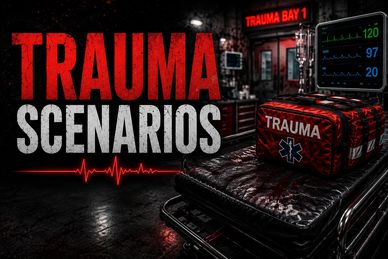
Trauma Scenarios You’ll Face
Multi-Vehicle Accident (MVA)
Multiple trauma patients arrive after a severe car crash. Your team must identify the most critical injuries, stabilize the patients, and work quickly to prevent complete system failure.
Severe Hemorrhage Control
A patient is rapidly losing blood. Teams must locate trauma supplies, solve clues to unlock equipment, and stop the bleeding before the patient crashes.
Penetrating Chest Trauma
A critical chest injury causes breathing complications and dropping oxygen levels. Players must assess the patient, interpret clues, and perform the correct emergency interventions before time runs out.
Head Trauma Emergency
A patient arrives unconscious after a major head injury. Teams must monitor changing vitals, analyze imaging clues, and identify signs of neurological decline while solving critical puzzles throughout the room.
Airway Obstruction & Respiratory Failure
The patient can no longer breathe properly. Teams must secure the airway, locate emergency respiratory equipment, and stabilize oxygen levels while racing against the clock.
Mass Casualty Trauma Challenge
The room becomes overwhelmed with multiple emergencies happening at once. Teams must communicate, prioritize treatment decisions, delegate tasks, and complete trauma protocols under extreme pressure to survive the scenario.
Trauma Code Blue Scenario
A patient suddenly becomes unresponsive during treatment. Your team must initiate a full trauma code response, locate emergency equipment, follow life-saving steps in the correct order, and stabilize the patient before the countdown ends.
Internal Bleeding Mystery
The patient’s condition continues to worsen, but the injury is not immediately visible. Teams must interpret labs, uncover hidden clues, review X-rays, and determine the source of internal bleeding before it becomes fatal.
Trauma Bay Extraction Challenge
Critical supplies and treatment tools are locked throughout the trauma bay. Players must crack medical codes, unlock trauma boxes, and complete emergency procedures while managing a rapidly declining patient condition under intense pressure.
Medical Scenarios
Cardiac Scenarios
Critical Care Scenarios
Medical Scenarios You’ll Face
Stroke Emergency
A patient suddenly develops slurred speech, confusion, and weakness on one side of the body. Teams must recognize the signs of a stroke, interpret clues, order the correct tests, and act quickly before time runs out.
Diabetic Crisis
Blood sugar levels begin crashing while the patient’s condition rapidly declines. Players must analyze symptoms, uncover hidden medical clues, and determine the correct intervention to stabilize the patient.
Severe Allergic Reaction
A patient experiences a life-threatening allergic reaction with swelling and respiratory distress. Teams must locate emergency medications, unlock treatment supplies, and stop the reaction before the airway closes.
Respiratory Distress Case
Oxygen levels continue dropping while alarms sound throughout the room. Teams must identify the cause of respiratory failure, manage oxygen support, and stabilize the patient before complete collapse occurs.
Sepsis Emergency
A patient’s infection begins spreading rapidly through the body. Teams must interpret vital signs, identify clues from labs and patient history, and begin the correct treatment path before the patient goes into septic shock.
Medication Error Investigation
Something went wrong during treatment. Players must review charts, analyze medication records, identify the mistake, and correct the issue before the patient’s condition becomes critical.
Altered Mental Status Mystery
A patient arrives confused and unresponsive with little information available. Teams must solve medical puzzles, investigate symptoms, and uncover the hidden cause behind the patient’s condition.
Chest Pain & Shortness of Breath
A patient’s symptoms continue worsening while the cardiac monitor changes in real time. Teams must determine whether the emergency is cardiac, respiratory, or something more dangerous before time expires.
Infectious Disease Isolation Scenario
Teams must enter a high-risk isolation room and follow proper safety steps while diagnosing and treating the patient. Communication, teamwork, and attention to detail become critical to surviving the challenge.
Critical Care Scenarios
Critical Care Scenarios
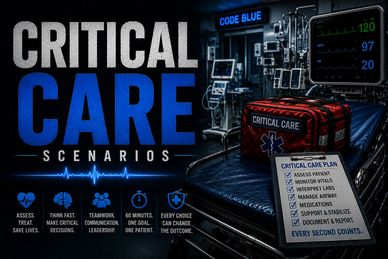
Critical Care Scenarios You’ll Face
Rapid Patient Decline
A critically ill patient suddenly begins crashing. Vital signs change rapidly, alarms sound throughout the room, and your team must work together to identify the problem and stabilize the patient before it’s too late.
Ventilator Management Emergency
The patient can no longer breathe effectively on their own. Teams must assess oxygen levels, interpret respiratory clues, manage ventilator settings, and prevent respiratory failure under intense pressure.
Septic Shock Crisis
A severe infection has caused the patient’s blood pressure and condition to rapidly decline. Players must interpret labs, identify the source of infection, and begin life-saving interventions before the patient goes into full organ failure.
Multi-System Organ Failure
Several body systems begin failing at once. Teams must prioritize treatments, monitor changing vitals, and make critical decisions quickly while managing multiple life-threatening complications at the same time.
ICU Code Blue
A full Code Blue is called inside the ICU. Teams must locate emergency equipment, follow advanced treatment protocols, perform critical steps in the correct order, and stabilize the patient before the countdown reaches zero.
Medication & Drip Management
Critical medications and IV drips must be correctly identified and managed to keep the patient alive. Teams must solve dosage clues, unlock treatment information, and prevent dangerous medication errors.
Neurological Critical Care Case
A patient develops sudden neurological complications inside the ICU. Teams must monitor changes in consciousness, identify warning signs, and intervene before permanent damage occurs.
Airway Collapse Scenario
The patient’s airway suddenly becomes compromised. Players must rapidly locate airway equipment, solve emergency clues, and complete the proper intervention steps before oxygen levels completely drop.
Trauma ICU Recovery
A severe trauma patient arrives in critical condition after emergency surgery. Teams must manage unstable vitals, interpret lab results, and prevent complications while the patient fights for survival.
High-Pressure ICU Team Challenge
Throughout every critical care scenario, communication and leadership are essential. Teams must think fast, delegate responsibilities, solve medical puzzles, and work together under pressure to complete the mission and escape within 60 minutes.
ICU Scenarios
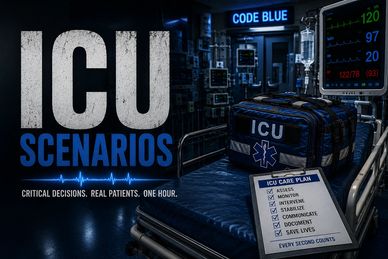
ICU Scenarios You’ll Face
Unstable ICU Patient
A critically ill patient’s condition begins rapidly changing. Teams must continuously monitor vital signs, recognize warning alarms, and make fast treatment decisions to prevent complete collapse.
Ventilator Emergency
The patient is fully dependent on a ventilator when oxygen levels suddenly begin dropping. Players must assess the airway, troubleshoot equipment issues, and stabilize breathing before respiratory failure occurs.
Post-Surgery ICU Recovery
A patient arrives in the ICU after emergency surgery with unstable vitals and multiple complications. Teams must interpret labs, monitor the patient closely, and respond quickly to sudden changes in condition.
ICU Code Blue
A full emergency Code Blue is activated inside the ICU. Teams must locate equipment, follow emergency response steps, perform life-saving interventions, and stabilize the patient before time expires.
Sepsis & Infection Control
A severe infection is spreading rapidly through the patient’s body. Teams must identify the source, follow critical care protocols, and begin the proper interventions before the patient enters septic shock.
Neurological ICU Crisis
The patient suddenly develops neurological complications including confusion, unresponsiveness, or seizure activity. Players must monitor symptoms, solve medical clues, and prevent further brain injury.
Multi-Alarm ICU Challenge
Multiple machines begin alarming at the same time while the patient’s condition worsens. Teams must quickly identify which problem is the most critical, prioritize treatment steps, and maintain control under pressure.
ICU Medication Management
Critical medications and IV drips are essential to keeping the patient alive. Teams must interpret medication clues, calculate the correct treatments, and avoid dangerous errors during the scenario.
Respiratory Failure Scenario
The patient begins experiencing severe respiratory distress while oxygen saturation levels rapidly decline. Teams must secure the airway, manage respiratory support, and prevent complete respiratory arrest.
High-Pressure ICU Team Experience
Every ICU challenge is designed to test communication, leadership, teamwork, and critical thinking. Players must work together under intense pressure to solve clues, stabilize the patient, and survive the 60-minute experience.
Deceased Scenarios

Deceased Scenarios You’ll Face
Unidentified Patient Investigation
A deceased patient arrives with little to no identifying information. Teams must examine evidence, review medical clues, analyze documents, and uncover the identity before time runs out.
Cause of Death Mystery
Something about the case doesn’t add up. Players must investigate medical records, analyze findings, interpret evidence, and determine the true cause of death to complete the case.
Morgue Evidence Challenge
Critical evidence has been hidden throughout the room. Teams must locate clues, unlock secured evidence containers, and piece together information to solve the investigation.
Toxicology Investigation
Lab results and patient findings point toward a possible overdose or poisoning. Teams must analyze toxicology clues, identify substances involved, and uncover what really happened to the patient.
Suspicious Trauma Case
The patient’s injuries tell a different story than the official report. Teams must investigate trauma findings, review imaging clues, and determine whether the injuries were accidental or intentional.
Time of Death Analysis
Players must work through medical findings, body clues, and environmental evidence to determine the estimated time of death before advancing to the next stage of the case.
Missing Evidence Scenario
Important files and evidence have disappeared from the investigation. Teams must crack hidden codes, search the room, and recover missing information needed to solve the case.
Infectious Disease Isolation Case
The deceased patient may have been exposed to a dangerous infectious disease. Teams must follow proper safety protocols, analyze patient history, and uncover the medical cause behind the outbreak.
Final Case File Escape Challenge
As the countdown approaches zero, teams must organize all findings, complete documentation, solve the final code, and close the investigation before the room locks down completely.
High-Pressure Investigation Experience
Every deceased scenario is designed to test teamwork, observation, communication, and critical thinking under pressure. Players must work together to uncover the truth, solve the case, and escape within 60 minutes.